
Articles of Association and related rules
If you have any questions or comments to our association, please contact us.
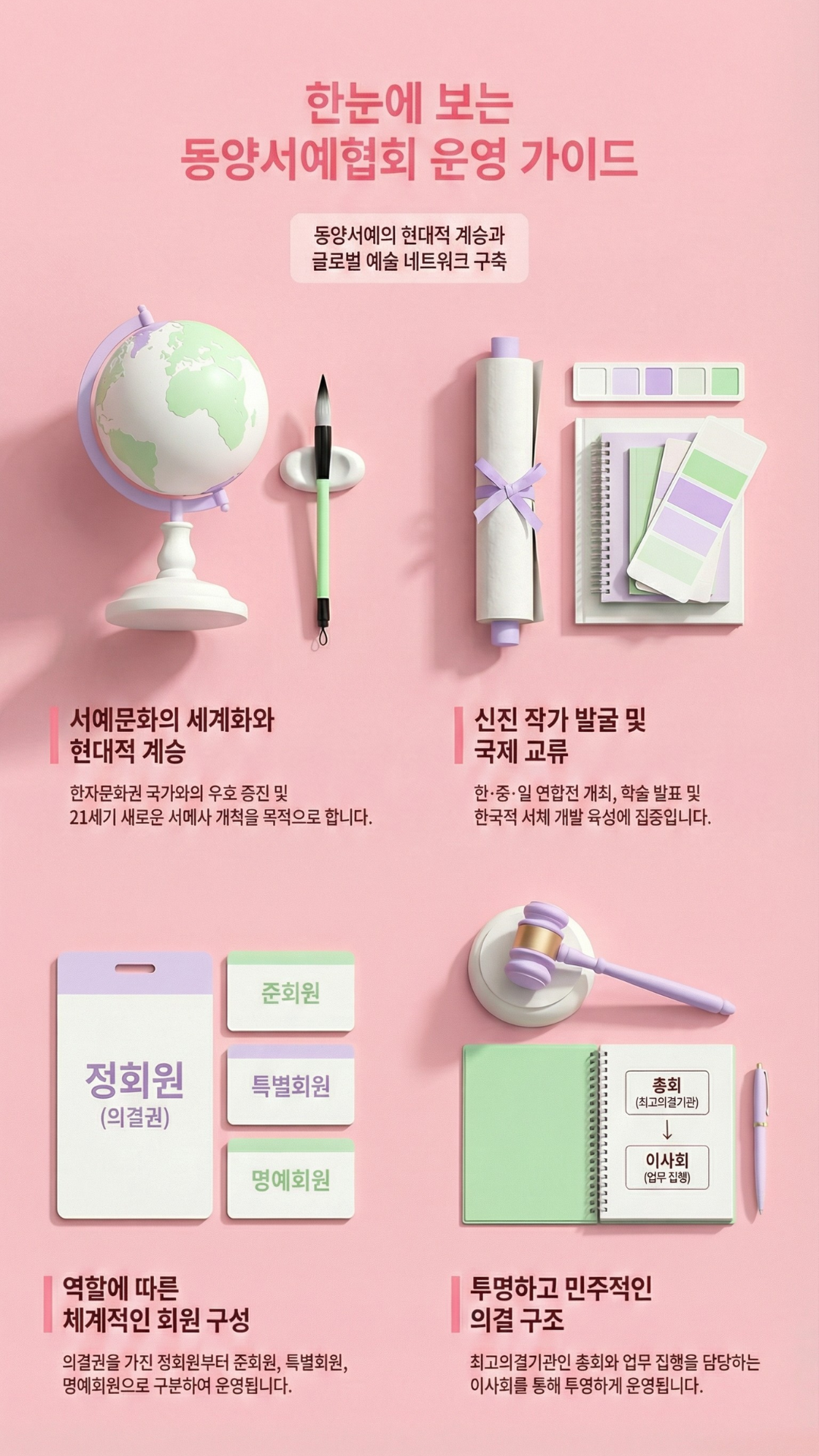
Chapter 1 General Rules
Article 1 (Name)
This corporation is called the “Oriental Calligraphy Association” (hereinafter referred to as the “Association”).
Article 2 (Location)
① The main office of the Plenary Session is located in Seoul.
② The branch office (branch) of the Plenary Session is 1. Gwangju Branch 2. Cheongju Branch 3. The Chungju branch is established with branches and branches in other necessary locations (each city and province).
Article 3 (Purpose)
In order to establish the creative independence of the Korean West Group, the purpose of this conference is to promote friendship with countries in the Chinese character culture (Korea, China, and Japan), which is the foundation of Oriental character art, sublimate it into art from around the world through the development of typefaces, including Hangul, and contribute to cultivating art education and calligraphy by pioneering a new calligrapher in the 21st century.
Article 4 (Business)
In order to achieve the purpose of the foregoing, the following projects are carried out.
- Discovering emerging artists through the holding of a joint exhibition between Korea, China, and Japan and a national contest
- National and international exchange exhibitions and academic presentations to introduce calligraphy culture
- Fostering Korean typeface development
- Research and publication of foreign literature on calligraphy
- Other projects necessary to achieve the purpose of the plenary session
Chapter 2 Membership
Article 5 (Eligibility of Members)
Members of the Plenary Meeting shall be those who approve the purpose of the establishment of the Plenary Session and obtain approval from the Board of Directors by submitting a prescribed application for admission.
Article 6 (Members' Rights))
Members have the right to participate in the operation of the Plenary Session through the General Assembly. However, associate members, special members, and honorary members can attend the general meeting and speak, but they do not have voting rights.
Article 7 (Member Obligations)
Members have the following duties.
- Compliance with the Articles of Incorporation and Regulations of the Plenary Session
- Implementation of General Assembly and Board of Directors resolutions
- Payment of membership fees and deductibles
Article 8 (Membership Withdrawal)
Members can freely withdraw by submitting a letter of withdrawal to the chairman.
Article 9 (Member Reward)
① As a member of the Plenary Session, those who have contributed to the development of the Plenary Session may be rewarded through a decision of the Board of Directors.
② As a member of the General Assembly, the Chairman of the Board of Directors may dismiss or reprimand a person who acts contrary to the purpose of the Plenary Session, or who fails to fulfill the duties of Article 7, after a decision of the Board of Directors or the General Assembly.
Chapter 3 Officers
Article 10 (Types and Numbers of Officers)
The General Assembly appoints the following officers.
- CEO 1 person
- 15 members of the company (including the chairman)
- 2 audits
※ The number of directors shall be 5 or more.
Article 11 (Appointment of Officers)
① Officers shall be elected at a general meeting and shall report their inauguration to the competent government office without delay.
② Officers must be elected within 2 months from the date the vacancy occurred.
③ New officers must be elected no later than 2 months before their term expires.
Article 12 (Dismissal of Officers)
If an officer commits an act that falls under any of the following subparagraphs, he or she may be dismissed after a general meeting vote.
- Acts that violate the purpose of the plenary session
- Disputes between executives, accounting fraud, or significant misconduct
- Acts that interfere with the work of the Plenary Session
Article 13 (Restrictions on Appointment of Officers)
① In the appointment of officers, directors cannot exceed 1/5 of the number of directors who are related to each other as stipulated in Article 777 of the Civil Code.
② Auditors must not have a kinship relationship between auditors or directors as stipulated in Section 777 of the Civil Code.
Article 14 (Executive Director)
① In order to focus on the purpose of the plenary session, a permanent director may be appointed.
② The executive director is appointed from among the directors after a vote of the board of directors.
Article 15 (Term of Officers)
① The term of an officer shall be 4 years.
② The term of an officer appointed by election shall be the remaining term of the predecessor.
Article 16 (Duties of Officers)
① The Chairman represents the General Assembly, oversees the work of the General Assembly, and becomes the chairman of the General Assembly and Board of Directors.
② Directors attend the board of directors to vote on matters relating to the work of the general meeting and handle matters delegated by the board of directors or the chairman.
③ An auditor performs the following duties.
- Auditing the financial situation of the plenary session
- Auditing matters relating to the operation and work of the General Assembly and Board of Directors
- When it is discovered that there is an error or injustice in the audit results of No. 1 and No. 2, it is necessary to request correction from the Board of Directors or General Meeting and report it to the State Administration
- Requesting the convening of a general meeting or board of directors when necessary to request corrections and reports under (3)
- Expressing opinions to the General Assembly, Board of Directors, or Chairman of the Board of Directors regarding the financial situation and work of the Plenary Session
Article 17 (Acting for the Chairman)
① When the chairman has an accident, a director appointed by the chairman shall act on behalf of the chairman.
② When the chairman is removed from office, the duties of the chairman are performed on behalf of the director in order of the elder.
③ In accordance with the provisions of Clause 2, directors acting on behalf of the chairman must go through the procedure for electing the chairman without delay.
Chapter 4 General Meeting
Article 18 (Composition of the General Assembly)
The General Assembly is the highest voting body of the Plenary Session and consists of members.
Article 19 (Classification and Convocation)
① General meetings are divided into regular general meetings and temporary general meetings, and the chairman of the board convenes them.
② Regular general meetings are convened until 1 month before the beginning of each fiscal year, and temporary general meetings are convened when the chairman deems it necessary.
③ When a general meeting is convened, the chairman must specify the agenda, date, and place of the meeting and notify each member in writing at least 7 days before the start of the meeting.
Article 20 (Special Provisions for Convocation of General Meeting)
① If there is a request for a convocation that falls under any of the following subparagraphs, the chairman shall convene a general meeting within 14 days from the date of the request for the convocation.
- When the majority of members of the staff proposed the purpose of the meeting and requested that it be convened
- When an audit requests to be convened in accordance with the provisions of Article 16 (3) (4)
- When one-fifth or more of the current members present the purpose of the meeting and request that it be convened
② If it is impossible to convene a general meeting for 7 days or more due to the evasion of the person who convened the general meeting, the general meeting can be convened with the approval of a majority of current members or one-third or more of the current members.
③ The general meeting in accordance with the provisions of paragraph 2 shall elect the chairman under the society of the oldest attending directors.
Article 21 (Decision Quorum)
① The General Assembly shall decide with the attendance of a majority of the current members and vote with the approval of a majority of the members present.
② A member's voting rights may be delegated in writing to another member attending the general meeting. In this case, the power of attorney must be submitted to the chairman before the start of the general meeting.
Article 22 (Functions of General Assembly)
The General Assembly shall vote on the following matters.
- Matters relating to the election and dismissal of officers
- Matters relating to the election and dismissal of officers
- Matters relating to the disposal and acquisition of basic assets and the borrowing of funds
- Approval of budgets and settlements
- Approval of the business plan
- Other important points
Article 23 (Reasons for Rejecting a General Assembly Decision)
Members shall not participate in the voting if they fall under any of the following subparagraphs:
- When voting on matters relating to oneself in the election and dismissal of officers
- When there is a conflict between the interests of oneself and the Plenary Session due to matters relating to the collection of money or property or lawsuits
Chapter 5 Board of Directors
Article 24 (Composition of the Board of Directors)
The Board of Directors consists of the Chairman and Director.
Article 25 (Classification and Convocation)
① The Board of Directors is divided into a regular board of directors and a temporary board of directors, which are convened by the chairman.
② A regular board meeting is convened until January before the start of each fiscal year, and an interim board meeting is convened when the chairman deems it necessary.
③ The chairman of the board of directors must specify the agenda, date, and place of the meeting and notify each director and auditor in writing at least 7 days before the start of the meeting.
Article 26 (Special Provisions for Convocation of Board of Directors)
① The Chairman of the Board of Directors shall convene a meeting of the Board of Directors within 20 days from the date of the request for convocation when there is a request for convocation falling under 1 of the following subparagraphs:
- When the majority of members of the staff proposed the purpose of the meeting and requested that it be convened
- When an auditor requests to be convened in accordance with the provisions of Article 16 (3) (4)
② If it is impossible to convene a board of directors meeting for 7 days or more because the person who convened the board of directors abstains or avoids it, the board of directors can be convened with the approval of a majority of the members of the board of directors.
③ The Board of Directors in accordance with the provisions of paragraph 2 shall elect its president under the society of the oldest attending director.
Article 27 (Prohibition of Written Resolutions)
Board decisions cannot be based on written resolutions.
Article 28 (Decision Quorum)
① The Board of Directors decides with the attendance of a majority of the current members and votes with the approval of a majority of the directors present. However, in the case of a married couple, the chairman decides.
② The voting rights of the Board of Directors cannot be delegated.
Article 29 (Resolutions of the Board of Directors)
The Board of Directors shall deliberate and vote on the following matters.
- Matters relating to business execution
- Matters relating to the operation of the business plan
- Matters relating to the preparation of budgets and financial statements
- Matters relating to changes in the articles of association
- Matters relating to property management
- Preparation of an agenda to be submitted to the General Assembly
- Matters delegated by the General Assembly
- Matters falling within its competence according to the provisions of the Articles of Incorporation
- Other matters deemed important by the Chairman for the operation of the Plenary Session
Chapter 6 Property and Accounting
Article 30 (Classification of Property)
The property of the Plenary Session is divided into basic property and ordinary property as follows.
- Basic property is the property where the founder appeared when the Association was established and the property determined as basic property by the Board of Directors, and the list is as shown in “Appendix 1.”
- Ordinary property shall be property other than basic property.
Article 31 (Disposal of Basic Property, etc.)
If you wish to dispose of the basic property of the Plenary Session (including sale, gift, and exchange), you must go through the procedure for permission to change the Articles of Association in accordance with the provisions of Article 40.
Article 32 (Revenue)
Proceeds from the plenary session shall be covered by members' membership fees and other income.
Article 33 (Fiscal Year)
The fiscal year of the plenary session follows the fiscal year of the government.
Article 34 (Budgeting)
The revenue and expenditure budget for the plenary session is prepared until 1 month before the start of each fiscal year, and determined by obtaining approval from the General Meeting after a vote of the Board of Directors.
Article 35 (Settlement)
The General Assembly shall prepare financial statements within 2 months after the end of each fiscal year and obtain approval from the General Meeting after a vote of the Board of Directors.
Article 36 (Audit)
Audits must be carried out at least 2 times a year.
Article 37 (Remuneration of Officers)
Remuneration shall not be paid to officers other than the executive director who is dedicated to the operation of the business. However, actual expenses required to perform the work can be paid.
Chapter 7 Office
Article 38 (Secretariat)
① A secretariat is established to handle the affairs of the Plenary Session under the direction of the Chairman.
② The secretariat may have one director and the required staff.
③ The Director General shall be appointed by the Chairman after a vote of the Board of Directors.
④ Matters relating to the organization and operation of the Secretariat shall be decided separately after a resolution of the Board of Directors.
Chapter 8 Remedies
Article 39 (Dissolution of a corporation)
① If the General Assembly wishes to be dissolved, the General Assembly shall vote with the approval of at least two-thirds of the current members to dissolve it, and report the dissolution to the competent government office.
② The remaining assets at the time of dissolution of the General Assembly shall be owned by the country, local government, or other non-profit corporation with a purpose similar to that of the General Assembly.
Article 40 (Amendment of Articles of Incorporation)
If you want to change these Articles of Association, the General Assembly must vote in favor of at least two-thirds of the current members and obtain permission from the State Administration.
Article 41 (Rulemaking)
Matters necessary for the operation of the Plenary Session other than those stipulated in these Articles of Association shall be determined by rules after a vote of the Board of Directors.
Addendum
Article 1 (Effective Date)
These Articles of Association shall take effect from the day they are registered with the court with the permission of the State Administration.
Article 2 (Transitional Measures)
Acts carried out by promoters and others to establish a corporation at the time of implementation of these Articles of Association shall be deemed to have been carried out in accordance with these Articles of Association.
Article 3 (Founder's name and seal)
In order to establish the Association, these Articles of Association are prepared and signed by all founders as follows.
Change of officer registration
: 2016.11.4. Permission to change the Articles of Incorporation (Chairman's term to Chairman's term) Ministry of Culture, Sports and Tourism
: 2016. 11.24 registration (Supreme Court)

제1조 (목적)
본 규정은 동양서예협회(이하 "협회"라 한다)의 회원 자격, 회비 체계 및 납부 절차 등을 명확히 규정하여 협회의 건전한 재정 운영과 회원 간 형평성을 확보하고, 동양 서예 문화의 발전에 기여함을 목적으로 한다.
제2조 (회원의 종류 및 정의)
① (회원의 구분) 협회의 회원은 납부 의무에 따라 다음과 같이 '일반회원'과 '평생회원'으로 구분한다.
가. 일반회원: 협회에 가입하여 본 규정 제3조에 명시된 연회비를 매년 납부하는 회원
나. 평생회원: 협회에 가입하여 본 규정 제3조 3항 또는 제4조에 명시된 평생회비를 일시(또는 분할) 납부하여 연회비 납부 의무를 영구히 면제받은 회원
② (회원의 등급) 제1항의 회원은 협회 활동 경력 및 성과에 따라 다음과 같은 등급을 부여받으며, 등급에 따른 권리와 의무는 이사회에서 별도로 정한다.
가. "청년작가": 40세 이하 작가로서 협회의 이념과 목적에 동의하는 자
나. "일반작가": 41세 이상 작가로서 협회의 이념과 목적에 동의하는 자
다. "추천작가": ⟪추천ㆍ초대작가 선임 규칙⟫에 의거 3년 이상 청년작가 혹은 일반작가 회원으로 활동하고 협회 수상작 기준 입상 점수 15점 이상을 취득한 자로서 이사회의 심의를 거친 자
라. "초대작가": 청년작가, 일반작가 혹은 추천작가로 3년 이상으로 활동하고 협회 수상작 기준 입상 점수 15점 이상을 취득한 이후 추가 2회 이상 출품하신 자 중 이사회의 최종 승인을 받은 자
마. "임원": 초대작가 중 임원으로서 요구되는 별도의 활동 기준(예: 지난 3년간 협회 주요 행사에 5회 이상 참여, 특정 위원회 활동 등)을 충족하고 이사회의 추천과 총회의 만장일치 승인을 거쳐 임명된 자
제3조 (회비 및 등록비 기준)
① 연회비

② 등록비 (가입 및 승급 심사 시)
③ 평생회원
가. (자격) 본회의 정회원(초대작가)은 누구나 평생회비를 납부하고 평생회원 자격을 신청할 수 있다.
나. (회비) 평생회비는 연회비(제3조 제1항)의 10배에 해당하는 금액으로 책정한다.
다. (임원 특례) 제4조에 따라 발전기금 200만원을 납부한 임원은 본 조의 평생회비를 완납한 것으로 간주하여 자동으로 평생회원 자격을 부여한다.
라. (혜택 및 자격 유지) 평생회비를 완납한 회원은 납부 시점의 등급이나 향후 승급 여부와 관계없이 '평생회원' 자격을 영구히 유지하며, 이후 '연회비'(제3조 제1항) 납부 의무를 영구히 면제받는다.
마. (승급 시 의무) 단, ‘라’ 항의 연회비 면제 혜택과 별개로, 평생회원이 상위 자격으로 승급할 경우 '승급 등록비'(제3조 제2항)는 본 규정에 따라 별도로 납부하여야 한다.
제4조 (임원 발전기금 및 혜택)
① 임원으로 취임하는 정회원(추천작가 및 초대작가)은 협회 발전을 위해 발전기금 2백만원을 납부하여야 한다.
② 발전기금은 최대 20개월까지 CMS를 통해 분할 납부가 가능하다.
③ 제1항에 따라 발전기금 2백만원을 완납한 정회원은 '평생회원' 자격을 자동으로 취득하며, 이후 연회비 납부 의무를 영구히 면제받는다.
④ 제3조 3항에 따라 이미 평생회원 자격을 취득한 회원이 임원으로 위촉될 경우, 제1항의 발전기금 2백만원에서 기(旣)납부한 평생회비를 공제한 차액을 납부하여야 한다.
제5조 (회비 납부 기간 및 자격 관리)
① 연회비는 매년 1월 31일까지 납부함을 원칙으로 한다.
② 연회비 미납에 따른 조치
가. 1차 미납 (당해 연도 연회비 미납 시): 미납 사실 통보 후, 회원 활동에 필요한 권한(예:
웹페이지 접속, 특정 행사 참여 등)이 제한됩니다.
나. 2차 미납 (연속 2년 미납 시): 회원 자격이 정지되며, 모든 회원 혜택 및 권한이 중단됩니다.
다. 3차 미납 (연속 3년 미납 시): 회원 자격이 상실(제명)됩니다.
③ 미납 연회비 완납 후 기존 자격 복원 가능.
④ 특별한 사유 시 이사회 승인으로 납부 유예 또는 분할 납부 가능.
제6조 (출품비 규정)
.png)
제7조 (개인전 및 서예단체 부스전 출품비 규정)
제8조 (표구비 규정)
① 입선 이상 작품에 대해 표구비를 부과하며, 표구는 협회가 정한 표준 옵션 및 가격으로 진행한다.
② 협회에서 제공하는 표구 서비스는 기계배접 방식이 아닌 손배접 방식을 원칙적으로 고수한다.
③ 표구비는 실제 표구 원가를 기반으로 책정하며, 회원에게는 할인 혜택을 제공한다.
④ 작품 규격별 표구비는 다음과 같다.
제9조 (도록비 규정)
- 전시 참여한 정회원에게는 도록 1권 무료 제공한다.
- 추가 구매 혹은 전시 참여 정회원이 아닌 경우

제10조 (작가 개인 홈페이지 초기 구축비 및 연간 유지보수비 규정)
① 홈페이지 제작 및 유지보수 계약을 체결하고 연간 유지보수비를 납부한 정회원은 해당 연도의 연회비가 면제된다.
② 전시에 40점 이상 작품을 출품한 작가에게는 다음의 혜택을 제공한다.
가. (최초 혜택) 개인 홈페이지 제작비 및 1차 연도 유지보수비를 전액 면제한다.
나. (지속 혜택) 2차 연도부터는 연간 유지보수비만 납부하면 홈페이지 유지보수 서비스를 지속적으로 제공받으며, 해당 연도의 연회비는 면제된다.
③ 전시에 30점 이상 출품하신 작가에게는 초기 구축비 면제되며, 해당 연도의 연회비는 면제된다.
④ 전시에 20점 이상 출품하신 작가에게는 초기 구축비의 50%를 할인한다.
제10조의 2 (단체 홈페이지 구축비 및 연간 유지보수비 규정)
① 본 조는 2인 이상의 작가(양인전, 연합전, 단체전)가 공동으로 홈페이지를 구축 및 운영할 경우의 비용을 규정한다.
② (회원가 적용 기준) 참여 작가 전원이 본회의 정회원일 경우 회원가를 적용한다. 참여 작가 중 비회원(또는 자격 정지 회원)이 1명이라도 포함될 경우 표준가를 적용한다.
③ (회원가) 회원가 기준 초기 구축비 및 연간 유지보수비는 다음 표와 같다.
.png)
④ (표준가) 표준가(비회원 포함) 기준 초기 구축비 및 연간 유지보수비는 다음 표와 같다.
.png)
⑤ (추가 옵션 및 할인) 다국어 지원, 온라인 도록 시스템, 작품 판매 기능 등 추가 옵션 비용과 조기 계약, 장기 계약 등에 따른 할인 정책은 이사회의 의결을 거쳐 별도의 운영 지침으로 정한다.
⑥ (혜택 중복 적용 불가) 제10조(작가 개인 홈페이지) ②항, ③항, ④항에 명시된 전시 출품 수량에 따른 구축비 면제 및 할인 혜택은 개인전 홈페이지에 한해 적용되며, 본 조의 단체 홈페이지에는 중복 적용되지 아니한다.
제11조 (납부 방법)
① 모든 비용은 온라인 납부(계좌이체, CMS 출금 등)를 원칙으로 한다.
② 온라인 결제 시스템을 통해 납부하며, 구매자가 원할 경우 전자 영수증 발급 가능하여야 한다.
제12조 (정회원 기본 혜택)
① 정회원 공통 혜택
가. 전시회 참가할 경우 도록 1권 무료 제공
나. 출품비, 표구비, 도록비 할인가 적용
다. 작가 개인 홈페이지 구축하실 경우 연회비 면제
② 추천작가 이상 추가 혜택
가. 초대작가 후보 등록 기회
나. 특별 전시회 및 해외 교류전 참가 우선권
다. 요건 충족시 작가 개인 홈페이지 초기 구축비 선별 지원
③ 초대작가 이상 추가 혜택
가. 상임이사 후보 등록 기회
나. 특별 전시회 및 해외 교류전 참가 우선권
다. 요건 충족시 작가 개인 홈페이지 초기 구축비 선별 지원
④ 임원 혜택
가. 운영위원 및 심사위원 위촉 우선권
나. 특별 전시회 및 해외 교류전 참가 우선권
다. 작가 개인 홈페이지 초기 구축비와 연간 유지보수비 1년 면제
라. 초대작가전 출품비 5% 할인
제13조 (고령 회원 혜택)
만 70세 이상, 가입 기간 10년 이상인 회원 중 협회 발전에 기여한 공로가 다음 각 호의 기준에 따라 현저하다고 인정되는 경우, 이사회 심의를 거쳐 연회비 면제 혜택을 부여할 수 있다.
① 협회 주요 전시회 5회 이상 참여
② 협회 주최 세미나 및 워크숍 강연 3회 이상
③ 협회 사업 기획 및 실행에 핵심적인 역할 수행 등
이때 공로 심의는 별도로 마련된 '공로 심사 기준'에 따라 객관적으로 이루어지며, 필요시 '공로 심사 소위원회'를 구성하여 평가할 수 있다.
제14조 (지부 활동 지원금)
① 협회는 매년 예산의 범위 내에서 지부 및 지회의 활성화를 위한 '지부 활동 지원금'을 편성하여야 한다.
② 지부가 주최하는 지역 공모전 및 기획전은 본회 이사회의 승인을 거쳐 '협회 후원 명칭'을 사용할 수 있으며, 본회는 이에 필요한 홍보 및 심사위원 파견을 지원한다.
③ 우수 활동 지부에 대해서는 연말 총회에서 포상하고, 차기 연도 지원금을 증액할 수 있다.
부칙 (附則) <2026. 1. 1.>
제1조 (시행일)
본 규정은 이사회의 의결을 거쳐 공포한 날부터 시행한다.
제2조 (준용규정)
본 규정에 명시되지 않은 사항은 이사회의 의결에 따른다.
제3조 (개정)
본 규정을 개정하고자 할 때에는 이사회의 의결을 거쳐 정기총회에 상정하고, 총회의 최종 의결로 개정할 수 있다.
운영 및 심사 규정
Regulations on Operation and Review
[시행 2025. 2. 8.] [제3호 시행령, 2026. 1. 1., 일부개정]

제1조 (목 적)
이 규정은 정관 제41조에 따라 사단법인 동양서예협회(이하 “본회”라 칭한다.)의 운영위원 및 심사위원 위촉과 심사방법 등 전시 운영 전반에 관한 사항을 규정함을 목적으로 한다.
제2조 (구성과 임무)
① 운영위원은 운영위원장과 운영위원으로 구성하고 대한민국 동양서예대전의 원활한 운영을 위해 기여하여야 한다.
② 심사위원은 심사위원장과 심사위원으로 구성하고 대한민국 동양서예대전의 공정한 심사를 통해 입상작품을 선정한다.
제3조 (자 격)
본회의 운영위원 및 심사위원의 자격은 다음 각 항과 같다.
① 본회 초대작가 (자문위원, 고문 포함)
② 다른 서예 단체 초대작가
③ 본회 고문이나 자문위원이 추천한 인사
제3조의 2 (심사위원의 제척, 회피, 기피)
① 심사위원은 다음 각 호에 해당하는 경우 해당 작품의 심사에서 제척(除斥)된다.
- 심사위원이 출품자의 배우자이거나 직계 존비속인 경우
- 심사위원이 출품자의 스승이거나, 출품자가 심사위원의 제자인 경우 (예: 대학/대학원 지도교수 등)
- 기타 공정한 심사를 기대하기 어려운 명백한 사유가 있는 경우
② 심사위원은 제1항의 사유가 있거나 스스로 공정한 심사가 어렵다고 판단될 경우, 심사위원장의 허가를 받아 해당 작품의 심사를 회피(回避)할 수 있다.
제3조의 3 (모집위원의 자격)
본회의 모집위원 자격은 다음 각 항과 같으며, 협회 전시에 대한 이해와 홍보 활동에 대한 적극성을 최우선으로 고려한다.
- 본회 일반 회원으로서 활동 기간이 1년 이상이고 협회 활동에 적극적으로 참여한 자
- 미술 또는 예술 관련 분야에서 3년 이상의 홍보, 마케팅, 또는 기획 업무 경력이 있는 자
- 본회 초대작가 1인 이상의 추천을 받아 협회 발전에 기여할 의사가 명확하다고 인정된 자
- 본회 주관 공모전 또는 전시에 3회 이상 출품 실적이 있는 작가
제4조 (위촉방법)
이사장은 대한민국 동양서예대전 개최 1개월 전에 심사 건수를 기준으로 인원을 정하되 2배수를 추천하여 이사회 의결을 통하여 위촉을 결정하고 위촉증서를 수여한다.
제4조의 2 (위원 수당 및 보수)
① 위원의 보수는 활동의 성격에 따라 수당 및 여비, 실적 인센티브로 구분하여 지급한다. 본 위원은 근로관계가 아닌 위촉직이며, 보수는 협회 재정 상황 및 내부 규정에 따라 책정한다.
② 심사위원 보수는 다음 각 호에 따라 지급한다.

③ 운영위원 보수는 다음 각 호에 따라 지급한다.
④ 모집위원 인센티브는 모집 실적에 따라 다음 각 호의 단계별 인센티브를 지급하며, 모집위원으로서의 회의 참석 등 기본 활동 수당과는 별도로 합산 지급한다.

⑤ 운영위원, 심사위원, 모집위원 등 겸직을 수행할 경우, 활동 일자 및 역할의 성격이 다를 시 각 항목의 수당을 합산하여 지급하는 것을 원칙으로 한다. 단, 심사위원이 모집 활동을 겸직한 경우, 본인이 모집한 출품자가 해당 공모전의 심사 대상에 포함되어 있다면, 해당 심사위원은 모집 인센티브 지급 대상에서 제외하거나 해당 출품작 심사에서 반드시 제척되어야 한다.
제5조 (심사부문 및 규격)
대한민국 동양서예대전의 공모작품 규격은 국전지(70×200cm), 전지(70×136cm), 반지(35×136cm)로 하고 공모 부문은 다음과 같이 6개 부문으로 하며, 필요할 경우 이사회 의결을 거쳐 심사부문을 추가할 수 있다.
① 한글 (한글정자ㆍ정자혼용ㆍ한글반흘림ㆍ반흘림혼용ㆍ한글진흘림ㆍ판본체, 민체 등)
② 한문 (갑골ㆍ금문ㆍ 전서ㆍ예서ㆍ해서ㆍ행서ㆍ초서)
③ 현대서예ㆍ 캘리그라피 (현대 한국화 및 수묵화 포함)
④ 전각ㆍ서각 (목각ㆍ석각 포함)
⑤ 문인화, 동양화, 채색화, 수묵화, 민화
제6조 (심 사)
① 옛 법첩을 기준하여 작품을 선정하되 서체별 구성, 여백, 조화, 묵색에 중점을 두고 작품성의 우열을 결정한다.
② 점획ㆍ결구ㆍ장법ㆍ조화의 완성미를 심사하되 다음 표의 여러 요소 들을 비교 심사한다.

③ 심사계획 및 준비
가. 심사위원장은 심사 개시 전 [별표 1] 심사계획서를 작성하여 다음 사항을 명시한다:
- 심사일정 및 진행방식
- 부문별 심사위원 구성
- 평가기준의 세부 적용방안
- 작품 진열및 검토 방식
나. 접수된 작품에 대해 심사번호를부여하고, 작가정보를 봉인하여 익명성을 보장한다.
다. 심사위원장은 심사 전 평가기준에 대한 사전교육을 실시한다.
④ 심사진행 및 평가방식
가. 각 심사위원은 [별표 2] 심사표를 사용하여 각 항목별 배점은 다음과 같다:
- 점획(點劃): 25점 (평가요소: 방원, 곡직, 경중, 장로, 형질 등)
- 결구(結構): 25점 (평가요소: 대소, 소밀, 허실, 향배, 호응 등)
- 장법(章法): 25점 (평가요소: 농담, 강유, 완급, 여백, 구성 등)
- 조화(調和): 25점 (평가요소: 기운, 아속, 미추, 통변, 창신 등)
나. 평가는 5점 단위로 채점하며, 각 항목별 평가근거를 간략히 기재한다.
다. 심사위원별 총점을 산출하고, 최고점과 최저점을 제외한 평균점수를 최종점수로 한다.
⑤ 심사의견 작성
가. 심사완료후 각 심사위원은 [별표 3] 심사의견서를 작성한다:
- 한글 부문 심사평
- 한문 부문 심사평
- 현대서예ㆍ캘리그라피 부문 심사평
- 전각ㆍ서각 부문 심사평
- 문인화, 채색화, 수묵화, 민화 부문 심사평
- 전체 심사평 및 개선제안
나. [별표 3] 심사의견서에는 출품작의 전반적 수준, 특징적 경향, 우수작품의 특성 등을 포함한다.
⑥ 종합평가 및 결과집계
가. 심사위원장은 [별표 4] 심사결과종합표를 취합하여 다음사항을 정리한다:
- 작품별 심사위원 평가점수
- 최종 평균점수 산출
- 순위 및등급 결정
나. 등급결정 기준:
- 90점 이상: 대상 및 최우수상 후보
- 85점 이상: 우수상 후보
- 80점 이상: 특선 후보
- 75점 이상: 입선 후보
다. 동점자 발생시 처리방안:
- 조화(調和) 점수가 높은 작품우선
- 장법(章法) 점수가 높은 작품우선
- 심사위원 간 협의를 통한 결정
라. 대상 선정: 90점 이상을 획득한 작품이 2점 이상일 경우, 심사위원 전원의 투표를 거쳐 최종 대상을 결정한다.
⑦ 심사결과 확정
가. 심사위원장은 종합심사 결과를 이사장에게 보고한다.
나. 이사회는 심사결과를 검토하고 최종 승인한다.
다. 확정된 심사결과는 수상자에게 개별 통보하며, 협회 홈페이지에 게시한다.
라. 심사위원은 본상(특선 이상) 수상작에 대하여 50자 내외의 '심사평(Key-point Feedback)'을 작성하여야 하며, 협회는 작가가 본인의 심사 점수표와 심사평을 온라인으로 조회할 수 있도록 시스템을 제공한다.
제7조 (시상 내역 및 상금)
① 제6조의 심사 결과에 따라 선정된 입상작에 대하여 다음과 같이 시상한다.
② 제6조의 심사 결과에 따른 입상 등급은 본상(本賞), 특별상(特別賞), 특선(特選) 및 입선(入選)으로 구분한다.
③ 각 입상 등급별 세부 내역, 선정 인원 및 상금은 다음과 같다.
가. 본상 (작품의 예술성을 최우선 기준으로 선정)
- 대상: 1명, 상장 및 상금 200만원
- 최우수상: 1명, 상장 및 상금 100만원
- 우수상: 2명, 상장 및 상금 30만원
나. 특별상 (서예의 균형 있는 연구와 다체(多體) 출품 장려)
- 오체상: 3명, 상장 및 상금 20만원
- 삼체상: 4명, 상장 및 상금 15만원
다. 기타 입상
- 특선: 30명(조정 가능), 상장
- 입선: 50명(조정 가능), 상장
④ 제3항의 특별상은 여러 서체에 대한 작가의 다각적인 노력과 연구를 장려하는 협회의 운영 방침을 반영하여 책정한다.
⑤ 제3항에 명시된 시상 인원(특선, 입선 포함)은 당해 연도 출품작의 총수 및 작품의 전반적인 수준을 고려하여 이사회의 의결로 조정할 수 있다.
⑥ 제3항 외에 협회의 재정 상황이나 특별 후원 유치 시, 이사회의 의결을 거쳐 추가적인 특별상(예: 후원사상, 이사장상 등)을 신설하여 시상할 수 있다.
⑦ 상금에 부과되는 제세공과금은 수상자 본인 부담을 원칙으로 한다.
⑧ 시상식 및 상금 지급에 관한 세부 절차는 이사장이 별도로 정하여 공지한다.
제8조 (임 기)
운영위원 및 심사위원의 임기는 위촉일로부터 당해년도 대한민국 동양서예대전 종료일까지로 한다.
제9조 (총회 안건의 사전 공개 및 의견 수렴)
① 이사회는 총회에 상정할 주요 안건을 개최 7일 전까지 협회 홈페이지 및 온라인 채널을 통해 전체 회원(준회원 포함)에게 공개하여야 한다.
② 협회는 온라인 댓글 또는 전자 설문 기능을 제공하여 등급과 무관하게 모든 회원이 안건에 대한 의견을 개진할 수 있도록 한다.
③ 이사회는 총회에서 제2항을 통해 수렴된 회원들의 주요 의견을 의무적으로 보고하여야 한다.
부칙 (附則)
부칙 <제1호, 2023. 08. 24>
제1조 (시행일) 이 규정은 공포한 날로부터 시행한다.
부칙 <제2호, 2025. 02. 08>
제1조 (시행일) 이 규정은 공포한 날로부터 시행한다.
부칙 <제3호, 2026. 01. 01>
제1조 (시행일) 이 규정은 공포한 날로부터 시행한다.
제2조 (경과조치) 이 규정 시행 이전에 기획된 전시에 대해서는 종전의 관례에 따른다.
전시 관리 및 운영 규정
Regulations on Exhibition Management and Operation
[시행 2026. 1. 1.] [제1호 시행령, 2026. 1. 1., 신규 개정]
제1장 총 칙
제1조 (목 적)
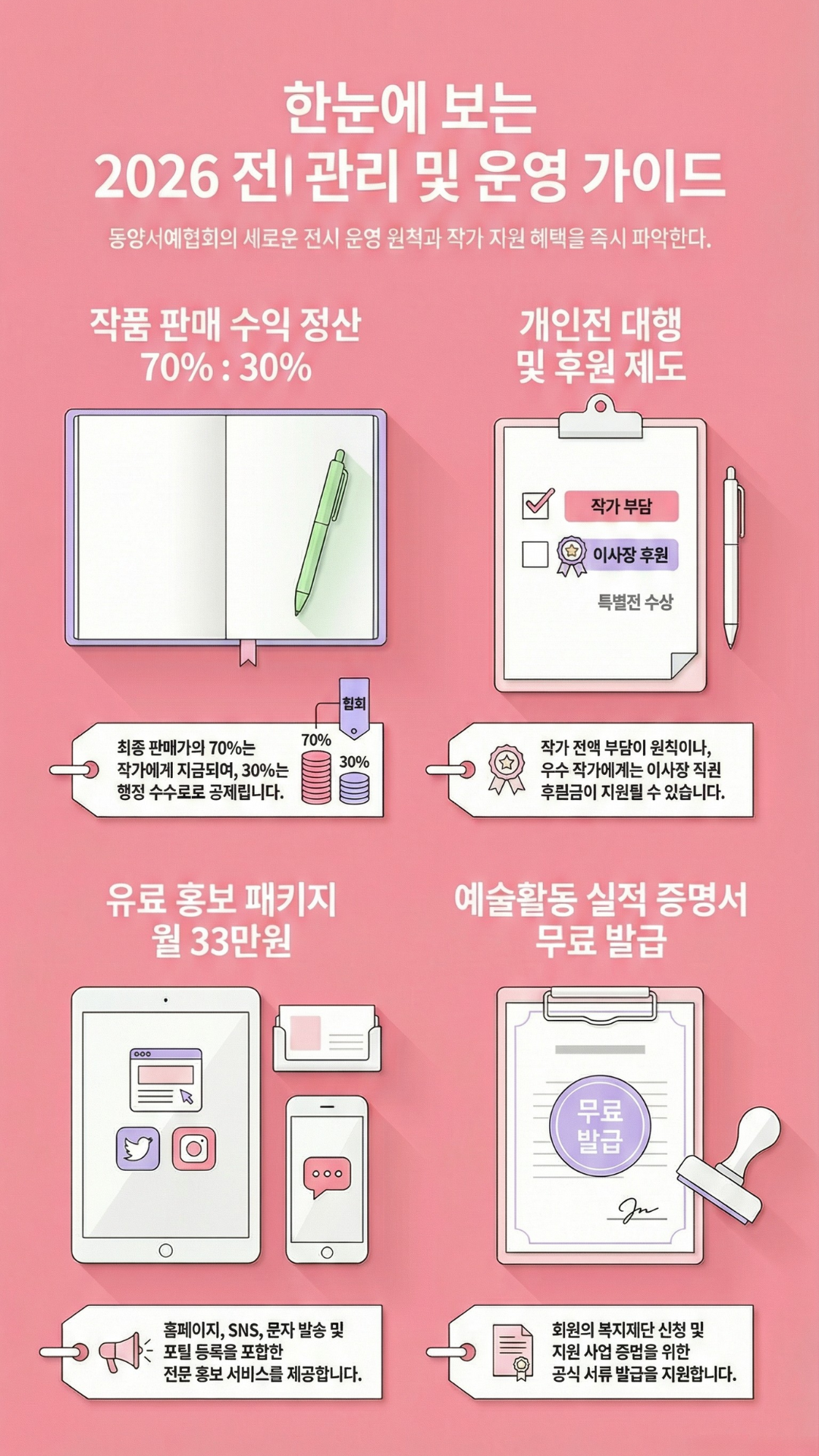
이 규정은 사단법인 동양서예협회(이하 "본회"라 한다)가 주관하거나 대행하는 전시회의 기획, 홍보, 작품 판매 및 운영 전반에 관한 사항을 규정하여, 전시 사업의 효율성을 높이고 회원의 권익 보호 및 창작 활동 지원을 목적으로 한다.
제2조 (적용 범위)
본 규정은 본회가 주최, 주관, 후원하거나 회원(또는 외부 작가)의 위탁을 받아 수행하는 모든 전시 관련 수익 사업 및 대행 업무에 적용한다. 다만, 대한민국 동양서예대전의 심사 및 운영에 관한 사항은 별도의 규정에 따른다.
제2장 전시 대행 및 기획 지원
제3조 (대행 업무의 범위)
본회는 신청 작가의 개인전 개최를 지원하기 위하여 다음 각 호의 업무를 대행할 수 있다.
- 전시장 대관 예약 및 행정 절차 대행
- 전시 기획, 연출 및 진행 보조
- 온·오프라인 홍보 마케팅
- 기타 전시 개최에 필요한 제반 사항
제4조 (비용 부담 및 후원)
① 전시 대행에 소요되는 대관료 및 제반 비용(도록 제작, 운송, 설치, 철수 등)은 수익자 부담 원칙에 따라 참여 작가가 전액 부담한다.
② 단, 이사장은 작가의 역량, 본회 기여도, 재정 상황 등을 고려하여 직권으로 소정의 후원금을 지원하거나 대행 수수료를 감면할 수 있다.
③ 작가는 확정된 소요 비용을 대관료 납부 기한 10일 전까지 본회가 지정한 계좌에 예치하여야 한다.
제4조의 2 (신진작가 발굴 및 예술활동 지원)
① 본회는 청년 및 신진 작가의 발굴과 예술인 등록(예술활동증명) 지원을 위하여 협회가 주최하는 기획 전시(인큐베이팅 전시 등)를 운영할 수 있다.
② 본 기획 전시는 참여 작가의 비용 부담을 줄이기 위하여 공동 전시(부스전 또는 그룹전) 형태로 진행하되, 예술활동 실적 인정이 가능하도록 작가별 독립된 전시 공간과 도록 지면을 배정하여야 한다.
③ 참가비는 대관료, 도록 제작비, 홍보비 등 실 소요 비용을 감안하여 이사회의 의결로 정한다.
④ 본회는 참가 작가가 한국예술인복지재단의 예술활동증명을 원활히 등록할 수 있도록 표준계약서 체결, 실적 확인서 발급 등 행정 편의를 제공한다.
제3장 전시 홍보 대행
제5조 (홍보 대행 서비스)
① 본회는 전시 작가의 효과적인 작품 홍보를 위하여 다음 각 호의 서비스를 유료로 제공한다.
- 본회 공식 홈페이지 및 SNS 채널 게시
- 회원 대상 문자 메시지 발송 및 뉴스레터 게재
- 주요 포털 사이트 및 미술 커뮤니티 정보 등록 대행
② 홍보 대행 수수료는 1개월 기준 금 330,000원(부가가치세 포함)을 원칙으로 하되, 물가 상승 및 서비스 범위에 따라 이사회의 의결로 조정할 수 있다.
제6조 (신청 및 납부)
홍보 대행 서비스를 이용하고자 하는 자는 소정의 신청서를 작성하여 제출하고, 서비스 개시 7일 전까지 수수료 전액을 납부하여야 한다.
제4장 작품 판매 및 정산
제7조 (판매 수수료 및 정산)
① 본회가 주관하거나 대행하는 전시 기간 중 작품이 판매될 경우, 판매가는 작가가 책정한 가격을 기준으로 한다.
② 본회는 판매 대행에 따른 카드 결제 수수료 및 제반 행정 비용으로 최종 판매가의 30%를 수수료로 징수한다.
③ 수수료를 공제한 나머지 70%의 금액은 판매 대금 결제가 완료되고 구매자의 구매 확정(반품 기간 경과)이 확인된 후, 전시가 종료된 날로부터 14일 이내에 작가에게 지급한다
④ 판매와 관련하여 발생하는 제세공과금(소득세 등)은 관련 법령에 따라 처리한다.
⑤ 작품 인도 후 발생한 하자가 아닌 단순 변심에 의한 반품의 경우, 기지급된 정산금의 반환 책임은 작가에게 있으며, 협회는 수수료(행정비용 제외)를 반환한다.
제5장 보칙
제8조 (실적 증명서 발급)
① 본회는 본회가 주관하거나 대행한 전시에 참여한 작가가 정부 및 지자체의 예술 지원 사업 신청(예술인 패스, 창작준비금 등)을 위해 실적 증빙을 요청할 경우, [예술활동 실적 증명서]를 발급하여야 한다.
② 제1항의 증명서 발급 수수료는 회원의 경우 무료로 하며, 비회원의 경우 소정의 발급 수수료를 징수할 수 있다.
제9조 (계약의 해지 및 환불)
① 작가가 개인 사정으로 전시 대행 또는 홍보 대행 계약을 취소하고자 할 경우, 다음 각 호의 기준에 따라 환불한다.
- 서비스 개시(홍보물 게시, 대관료 납부 등) 7일 전까지: 전액 환불
- 서비스 개시 7일 전 ~ 1일 전까지: 총비용의 50% 환불
- 서비스 개시 이후: 환불 불가
② 이미 지출된 비용(대관 계약금, 디자인 비용 등)은 환불 금액에서 제외하고 실비 정산한다.
제10조 (손해배상)
전시 진행 중 작가의 귀책사유로 인하여 본회 또는 제3자에게 손해를 끼친 경우, 작가는 그 손해를 배상하여야 한다.
제11조 (기타)
본 규정에 명시되지 않은 사항은 이사회의 의결 또는 일반적인 관례에 따른다.
제6장 대중 접근성 강화 및 교육 프로그램
제12조 (디지털 아카이브 구축 및 개방)
① 본회는 역대 수상작 및 회원 작품을 디지털화하여 온라인 서예 아카이브를 구축·운영한다.
② 아카이브 자료는 저작권 보호 기술을 적용한 후, 비영리 교육 및 연구 목적에 한하여 일반 대중이 무료로 열람할 수 있도록 개방한다.
제13조 (대중 서예 교육 및 체험)
① 본회는 서예의 대중화를 위해 연 2회 이상 일반인 대상 '오픈 서예 아카데미' 또는 무료 체험 교실을 개설해야 한다.
② 청소년 및 대학생의 참여를 독려하기 위해 별도의 청년 서예 공모 트랙을 신설하고 참가비를 감면할 수 있다.
부칙 (附則)
부칙 <제1호, 2026. 01. 01>
제1조 (시행일) 이 규정은 공포한 날로부터 시행한다.
제2조 (경과조치) 이 규정 시행 이전에 체결된 전시 대행 계약은 종전의 관례에 따른다.
Rules for selecting recommended and invited artists
Regulations on the Appointment of Recommended and Invited Artists
[시행 2023. 8. 23.] [제3호 시행령, 2026. 1. 1., 일부 개정]

제1장 총칙
제1조(목적)
이 규정은 정관 제41조에 따라 사단법인 동양서예협회(이하 "본회"라 한다)의 추천작가 및 초대작가 선정에 관한 사항을 규정함을 목적으로 한다.
제2장 자격 심사 및 선정
제2조(선정방법)
① 추천작가는 다음 각 호에서 정하는 점수를 합산하여 10점 이상 취득한 자 중에서 선정한다.
② 초대작가는 다음 각 호에서 정하는 점수를 합산하여 15점 이상 취득한 자 중에서 선정한다.
③ 2024년부터는 전통부문과 현대부문으로 분리하여 추천작가 및 초대작가 증서를 수여한다.
제3조(자격 심사 필수 요건)
① 제2조의 점수 요건을 충족한 자라 하더라도, 다음 각 호의 요건을 모두 갖추지 못한 경우 선임 대상에서 제외한다.
- 신청일 기준 최근 3년 이내 본회 전시에 연속 출품한 실적이 있는 자
- 자격심사위원회가 실시하는 최근 대표작 포트폴리오 심사를 통과한 자
- 본회 주관 행사 운영, 봉사 등 협회 기여 활동이 3회 이상 확인된 자
- 최근 5년 이내 본회 징계 처분을 받은 사실이 없는 자
제4조(수상실적 배점기준)
① 대한민국 동양서예대전 입상자 배점
1. 입선: 1점
2. 특선: 3점
3. 삼체상: 5점
4. 오체상: 7점
5. 우수상: 7점
6. 최우수상: 8점
7. 대상: 9점
② 본회 주최 국제서예전람회 수상실적은 제1항의 배점과 동일하게 적용한다.
③ 입상작품이 화첩에 수록된 경우 0.5점을 추가 가산한다.
④ 대상 수상작품이 국립박물관 또는 미술관에 소장된 경우 1점을 추가 가산한다.
⑤ 같은 해 입상점수는 최고점수 하나만 인정한다.
제5조(지회 전람회 배점기준)
① 본회 지회 주최 전람회의 수상실적은 다음 각 호와 같이 차등 배점한다.
1. 광역시‧도 규모: 2점
2. 시‧군‧구 규모: 1점
② 3년 연속 수상실적 보유 시 1점을 추가 가산한다.
③ 같은 해 대한민국 동양서예대전 또는 타 지회 전시회 취득점수가 있을 경우에는 최고점수 하나만 인정한다.
제6조(학력 및 경력 및 기여도 가산점)
① 서예 관련 학력에 대해 다음 각 호와 같이 가산점을 부여한다.
1. 서예관련학과 학사학위 취득 및 수료자: 2점
2. 서예관련학과 석사학위 취득 및 수료자: 추가 1점
3. 서예관련학과 박사학위 취득 및 수료자: 추가 2점
② 다음 각 호의 경력에 대해 가산점을 부여한다.
1. 서예관련 자격증 보유자: 1점
2. 전통서예 전수자: 본회 초대작가 이상의 자격을 갖춘 서예가의 문하생으로서 3년 이상 사사(師事)한 경력 보유자 : 2점
3. 해외 서예관련 학위 취득자: 동등 학위 수준으로 인정
③ 협회 발전 및 사회적 가치 확산에 기여한 경우 다음 각 호의 가산점을 부여한다 (최대 3점).
- 협회 주관 행사의 운영/실행위원 또는 자원봉사자로 3회 이상 활동한 자: 1점
- 협회 지부/지회 활성화를 위한 기획 활동이 증빙된 자: 1점
- 서예 재능 기부 등 사회공헌(ESG) 활동이 연 20시간 이상 증명된 자: 1점
- 청년작가(40세 이하)로서 온라인 홍보단 활동을 1년 이상 수행한 자: 1점
제3장 심사절차
제7조(자격심사위원회)
① 자격심사위원회는 다음 각 호의 위원으로 구성한다.
1. 초대작가 5인 이상
2. 외부 전문가 3인 이상 (단, 외부 전문가가 전체 위원의 3분의 1 이상이 되도록 한다.)
3. 이사회에서 선임한 위원
② 위원의 임기는 2년으로 하며, 연임할 수 있다.
③ 심사의 공정성을 위해 위원 중 과반수는 신규 위촉하여야 한다.
제8조(심사방법)
① 심사는 연 2회 실시하며, 서류심사와 작품심사로 구분한다.
② 작품심사는 최근 3년 이내 제작된 대표작품 3점을 대상으로 한다.
③ 심사위원 전원의 3분의 2 이상 찬성으로 자격을 부여한다.
④ 신청자는 별지 서식 "추천・초대작가신청서"를 작성하여 제출하여야 하며, 자격심사위원회의 심의를 거쳐 이사장이 최종 선임한다
제4장 자격관리
제9조(자격유지 의무)
① 추천작가 및 초대작가는 다음 각 호의 의무를 이행하여야 한다.
1. 2년마다 자격갱신을 위한 작품 제출
2. 연 1회 이상 협회 주최 전시회 참가
3. 신진작가 지도 및 멘토링 참여
4. 소정의 연회비 납부
② 추천작가 및 초대작가의 자격요건은 다음 각 호와 같다.
1. 추천작가는 본 협회 정회원으로서 3년 이상 활동하고, 본 협회가 인정하는 전국규모 공모전 입상 실적이 있어야 한다.
2. 초대작가는 본 협회 추천작가로서 5년 이상 활동한 경력이 있어야 한다.
3. 전 각 호의 자격요건을 갖춘 자로서 이사회의 심의를 거쳐 이사장이 최종 선임한다.
제10조(자격정지 및 취소)
① 다음 각 호의 어느 하나에 해당하는 경우 자격을 정지한다.
1. 2년 연속 전시회 불참
2. 연회비 2년 이상 미납
② 다음 각 호의 어느 하나에 해당하는 경우 자격을 취소한다.
1. 협회의 명예를 심각하게 훼손한 경우: 다음 각 목의 행위 등으로 징계위원회 심의를 거쳐 자격유지가 어렵다고 판단된 경우
가. 법령을 위반하여 금고 이상의 형을 선고받거나 사회적으로 중대한 물의를 일으킨 경우
나. 작품의 표절 또는 부정행위가 확인된 경우
다. 협회 또는 타 회원에게 심각한 손해를 입혔거나 지속적인 비방, 허위사실 유포 등으로 협회 활동을 저해한 경우
2. 자격정지 기간이 3년을 초과한 경우
3. 본인이 자격포기를 서면으로 신청한 경우
제5장 특별규정
제11조(특별선임)
① 다음 각 호의 어느 하나에 해당하는 자는 이사회의 3분의 2 이상 찬성 의결로 특별 선임할 수 있다.
1. 서예문화 발전에 특별한 공헌이 있는 자
2. 국내외 서예교육에 20년 이상 종사한 자
3. 문화체육관광부에 등록된 타 서예단체 초대작가
제12조(명예작가)
① 다음 각 호의 어느 하나에 해당하는 자는 명예작가로 추대할 수 있다.
1. 30년 이상 초대작가 자격을 유지한 자
2. 만 70세 이상으로서 협회 발전에 현저한 공헌이 있는 자
② 명예작가는 회비 및 출품 의무를 면제한다.
제13조(국제교류)
① 국제 서예교류 활성화를 위해 다음 각 호의 사항을 인정한다.
1. 국제서예전람회 수상실적
2. 해외 서예단체와의 교류전 참가실적
② 해외 서예단체와 상호인증 제도를 운영할 수 있다.
부칙 (附則)
부칙 <제1호, 2023. 08.24>
제1조(시행일) 이 규정은 공포한 날부터 시행한다.
부칙 <제2호, 2025. 02.08>
제1조 (시행일) 이 규정은 공포한 날로부터 시행한다.
제2조(경과조치)
① 이 규정 시행 전에 취득한 자격은 이 규정에 따라 취득한 것으로 본다.
② 제8조의 의무사항은 이 규정 시행일로부터 1년이 경과한 날부터 적용한다.
부칙 <제3호, 2026. 01.01>
제1조 (시행일) 이 규정은 공포한 날로부터 시행한다.
제2조(경과조치)
① 이 규정 시행 전에 취득한 자격은 이 규정에 따라 취득한 것으로 본다.
② 제8조의 의무사항은 이 규정 시행일로부터 1년이 경과한 날부터 적용한다.
작품 감정 및 보증서 발행 규정
Regulations on Artwork Appraisal and Certificate Issuance
[시행 2026. 2. 13.] [제1호 시행령, 2026. 2. 13., 신규 개정]

제1장 총칙
제1조 (목적)
본 규정은 「미술진흥법」 및 관련 법령을 준수하며, 사단법인 동양서예협회(이하 "협회")가 주관하는 전시 및 판매 작품의 진위 감정 및 공정한 시가 감정(가치 평가) 및 보증서 발행에 관한 절차와 기준을 정함으로써, 법적 공신력을 확보하고 미술 시장의 투명성을 제공하며 구매자의 권익을 보호하며 한국 서예의 올바른 가치 평가를 선도적으로 확립함을 목적으로 한다.
제2조 (적용 범위)
본 규정은 협회가 기획, 주관 또는 후원하는 모든 전시회 및 판매 행사에서 거래되는 서예 작품에 적용한다.
제2장 감정위원회
제3조 (위원회 구성)
- 작품의 공정한 감정을 위하여 '감정위원회'(이하 "위원회")를 둔다.
- 위원회는 서예 미학 및 서체에 정통한 안목 감정 위원과 보존과학 및 데이터 분석 전문가인 과학 감정 위원을 포함하여 5인 내외로 구성한다.
- 협회는 감정의 전문성 및 공정성 유지를 위해 감정위원의 자격 요건을 명확히 하고, 정기적인 심화 교육 및 보수 교육을 의무적으로 시행한다.
- 감정위원은 협회가 주관하는 전문 감정인 양성 과정을 이수하고 자격을 갱신해야 한다.
제3장 감정 기준 및 절차
제4조 (감정 원칙)
감정은 전통적 안목 감정, 과학적 분석, 출처 조사를 종합하는 '다각적 접근법'을 원칙으로 한다.
제5조 (감정 방법)
위원회는 다음 각 호의 방법으로 진위를 판별한다.
- 양식적 분석 (Stylistic Analysis): 작가 고유의 필법(용필), 결구, 장법, 낙관 및 서명을 기준작과 비교 분석한다.
- 과학적 분석 (Scientific Analysis): 필요시 종이, 먹, 인주의 성분 분석(XRF 등) 및 연대 측정을 실시하여 재료의 시기적 일치 여부를 검증한다.
- 인공지능 기반 분석: 육안으로 식별하기 어려운 미세 패턴 및 획의 특징점은 AI 알고리즘을 활용해 보조적으로 검증할 수 있다.
- 출처 조사 (Provenance Research): 전시 도록, 문헌 기록, 소장 이력 등을 추적하여 작품의 이동 경로를 확인한다.
제4장 보증서의 발행 및 관리
제6조 (보증서 기재 사항)
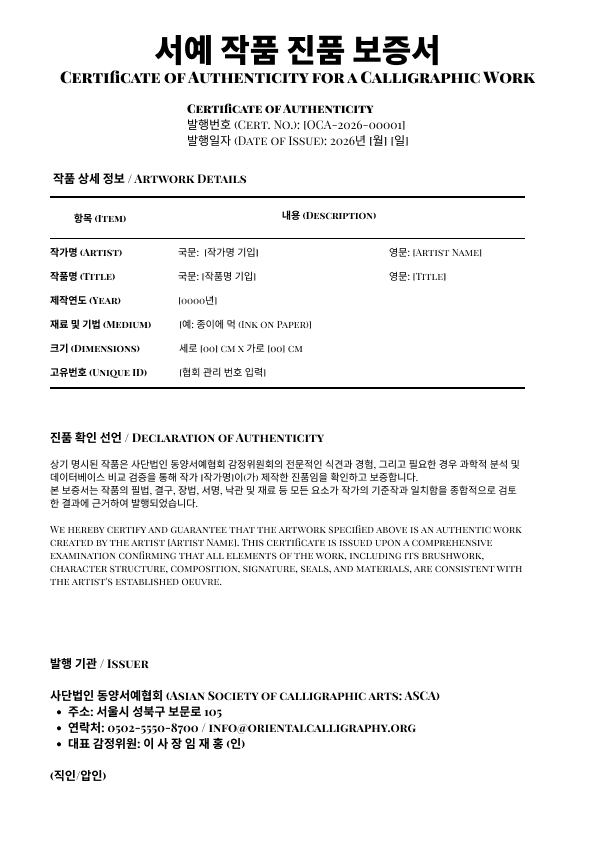
진품으로 판정된 작품에 대해 발행하는 보증서(Certificate of Authenticity)에는 다음 사항을 필수적으로 기재해야 한다.
- 작가명, 작품명, 제작년도
- 재료 및 기법, 작품 크기 (세로×가로)
- 작품의 전체 및 세부 고해상도 이미지
- 진품 확인 선언 (Declaration of Authenticity) 및 보증 내용
- 발행 기관 정보, 발행일, 대표 감정위원의 서명 및 직인
- 감정된 시가 감정가(Valuation Price)
- 가치 평가 기준일 (단, 의뢰인이 시가 감정을 요청한 경우에 한함)
제7조 (고유번호 및 위조 방지)
- 모든 보증서는 위·변조 방지를 위해 협회가 부여한 고유식별번호(Unique ID)로 관리하며, 협회 데이터베이스에 영구 보존한다.
- 발행하는 보증서 용지는 워터마크 또는 복사 방지 패턴이 삽입된 특수 용지를 사용하며, 작품 이미지 위에 협회 철인(압인)을 날인하여 물리적 위·변조를 방지해야 한다.
제8조 (데이터베이스 구축 및 활용 동의)
- 협회에 출품되거나 기증되어 감정 절차를 거친 작품의 고해상도 이미지 및 관련 감정 데이터는 협회의 '진위 감정 AI 알고리즘 고도화' 및 '디지털 아카이브 구축'을 위한 비상업적 연구 데이터로 영구 활용될 수 있다.
- 작품의 출품자 또는 기증자는 제1항의 데이터베이스 구축 및 활용에 명시적으로 동의한 것으로 간주하며, 이의를 제기할 수 없다.
- 협회는 제1항에 따라 수집된 데이터를 작가 또는 소장자의 식별이 불가능한 형태로 관리하며, 상업적 목적으로 외부에 유출하거나 활용하지 않는다.
제9조 (재발행)
보증서는 원칙적으로 재발행하지 않는다. 단, 천재지변 등 불가피한 사유로 훼손된 경우, 소장자가 원본 파편 등 증빙을 제출하고 위원회의 심의를 거쳐 1회에 한해 재발행할 수 있다.
- 분실 시 처리: 분실 시에는 원칙적으로 재발행 불가함을 재확인하고, 예외적으로 재발행이 필요할 경우 분실 경위에 대한 소장자의 진술서 및 경찰서 신고 확인서 등 더욱 엄격한 증빙과 공고 절차를 거쳐 재발행할 수 있도록 명시해야 합니다. (이때 소정의 재발행 수수료를 규정할 수도 있습니다.)
제10조 (보증의 범위 및 면책)
- 책임 제한 명시: 보증서의 효력은 “발행 당시의 진위 여부에 한정"함을 명확히 합니다.
- 면책 사항 명시: 다음 사유 발생 시 보증 효력이 상실되거나 협회가 책임을 면할 수 있음을 명시합니다.
- 보증서의 양도 시 협회에 신고하지 않은 경우
- 작품의 훼손이나 변형이 발생한 경우
- 보증서 원본을 제시하지 않는 경우
- 제3의 기관 감정 결과가 다르게 나왔을 때 협회의 재심의 절차 등.
부칙 (附則)
부칙 <제1호, 2026. 02.13>
제1조(시행일) 이 규정은 공포한 날부터 시행한다.


Membership eligibility and requirements
Regulations on the Establishment and Operation of Branches and Chapters
[시행 2026. 2. 13.] [제1호 시행령, 2026. 2. 13., 신규 개정]

제1장 총칙
제1조 (목적)
본 규정은 「사단법인 동양서예협회 정관」 제2조 2항 및 제41조 제3호에 근거하여, 협회 지부 및 지회(이하 '지부 등')의 설치, 운영, 활동, 재정 및 관리에 필요한 세부 사항을 규정하여 조직 운영의 효율성과 공정성, 그리고 전국적 활동의 안정성을 확보함을 목적으로 한다.
제2조 (용어의 정의)
- 지부(Branch): 광역 단위 행정 구역(특별시, 광역시, 도)을 중심으로 설치되며, 해당 지역의 협회 활동을 총괄하는 광역 조직을 말한다.
- 지회(Chapter): 기초 단위 행정 구역(시, 군, 구)을 중심으로 설치되며, 지부의 관리·감독 하에 특정 지역의 실무 활동을 수행하는 기초 조직을 말한다.
- 정회원: 협회 정관에 따라 정회원 자격을 취득한 자(기존 작가 및 공모전 입상자 등)를 말한다.
제3조 (적용 범위)
지부 등의 운영 및 활동은 정관과 본 규정에 따르며, 본 규정에 명시되지 않은 사항은 이사회의 의결 및 관계 법령에 따른다.
제2장 설치 및 인준
제4조 (설치 기준)
- 지부를 설치하고자 하는 지역에는 최소 20명 이상의 정회원이 주소지를 두고 활동하고 있어야 한다.
- 지회를 설치하고자 하는 지역에는 최소 10명 이상의 정회원이 주소지를 두고 활동하고 있어야 하며, 해당 지역을 관할하는 지부의 추천을 받아야 한다.
제5조 (인준 신청 및 구비 서류)
지부 등을 설치하고자 하는 자는 다음 각 호의 서류를 갖추어 본회에 인준을 신청해야 한다.
- 지부(지회) 설립 인준 신청서 (대표자 및 발기인 명부 포함)
- 해당 지역 정회원 명부 (활동 증빙 자료 포함)
- 최초 연간 사업계획서 및 예산안
- 지부장 선출에 관한 증빙 서류
제6조 (인준 심사 및 절차)
- 본회 사무국은 신청 서류를 접수한 후 30일 이내에 적정성을 심사하고, 필요한 경우 현장 실사를 진행할 수 있다.
- 심사 결과는 본회 이사회에 상정하여 최종 승인을 받아야 한다.
- 이사회의 승인을 받은 지부 등에는 본회 명의의 인준서를 발급하고, 협회 공식 조직으로 등록한다. 인준일은 이사회 의결일로 한다.
제3장 권리와 의무
제7조 (지부 등의 권리)
지부 등은 다음 각 호의 권리를 갖는다.
- 협회 명칭 사용권: 본회의 명칭(사단법인 동양서예협회)을 사용하여 해당 지역에서의 활동을 대외적으로 홍보할 권리. 단, 사용 목적과 범위는 제13조에 따른다.
- 활동 지원금 신청권: 본회에서 편성하는 '지부 활동 지원금' 및 사업 보조금을 규정에 따라 신청할 권리.
- 대의원 파견권: 본회 정기 총회 및 주요 회의에 해당 지부 등을 대표하는 대의원을 파견할 권리.
제8조 (지부 등의 의무)
지부 등은 다음 각 호의 의무를 성실히 이행해야 한다.
- 정관 및 규정 준수: 본회 정관 및 본 규정을 비롯하여 이사회에서 의결한 모든 세부 규칙을 준수해야 한다.
- 활동 보고 의무: 매년 1월 31일까지 직전 연도의 연간 사업 결산 보고서 및 해당 연도의 사업계획서를 본회에 제출해야 한다.
- 핵심 가치 실현: 지부 운영의 핵심 가치인 대중 참여(Publicity), 투명성(Transparency), 지속 가능성(Sustainability)을 실현하기 위한 활동을 의무적으로 수행해야 한다.
제4장 운영 및 활동
제9조 (지부장 및 임원 선출)
- 지부장은 해당 지부 정회원들의 선출 또는 운영위원회의 의결을 통해 선임하는 것을 원칙으로 한다. (선출 방식은 지부별 세칙으로 정한다.)
- 지부장 및 임원의 임기는 3년으로 하며, 1회에 한하여 연임할 수 있다.
제10조 (직무 대행 및 인수인계)
- 지부장의 갑작스러운 사퇴 또는 3개월 이상의 장기 부재 발생 시, 수석 부지부장, 운영위원회에서 선출된 임원 순으로 직무 대행자를 지정하여 조직 운영의 연속성을 확보해야 한다.
- 직무 대행자는 지부장 권한의 범위 내에서만 직무를 수행할 수 있으며, 지부 임원진은 행정 문서, 재정 장부, 자산 목록 등을 포함한 명확한 인수인계 절차를 거쳐 그 결과를 본회에 보고해야 한다.
제11조 (주요 사업에 대한 본회 승인)
- 지부 등이 협회 명칭을 후원 명칭으로 사용하여 지역 공모전, 대규모 수익 사업, 또는 해외 교류 전시 등 대외적 리스크가 발생할 수 있는 주요 사업을 개최할 경우, 사전에 본회 이사회의 승인을 받아야 한다.
- 승인 신청 시 사업계획서, 예산안, 보험 가입 계획 등 리스크 관리 대책을 함께 제출해야 한다.
제12조 (찾아가는 서예 의무)
지부 등은 지역 사회 밀착도 증진을 위해 갤러리 외 장소에서 개최하는 '찾아가는 서예' 또는 팝업 전시를 분기별 1회 이상 (연 4회) 실시하는 것을 최소 목표로 한다.
제5장 재정 및 감사
제13조 (재정 운영 및 회계 원칙)
- 지부 등의 재정은 본회 재정과는 독립된 독자 회계를 원칙으로 한다.
- 지부 등이 본회로부터 활동 지원금을 수령한 경우, 해당 지원금은 별도 계좌에서 관리하고 본회가 요구하는 양식에 따라 사용 내역 정산 보고서를 제출해야 한다.
- 지부 운영의 재정적 지속 가능성을 확보하기 위해, 연간 총수입 중 '회비 외 수익이 최소 10% 이상'이 되도록 정량적 목표를 설정하고 이를 매년 운영위원회에서 결의해야 한다.
제14조 (감사 권한 및 절차)
- 본회는 지부 등의 재정 운영 및 주요 활동에 대하여 정기적으로 또는 필요하다고 인정될 때 수시 감사를 실시할 수 있는 권한을 갖는다.
- 감사/윤리위원회는 예산 집행, 재정 장부, 주요 의사결정 문서 등을 검토하며, 지부 등은 이에 성실히 협조해야 한다.
- 감사 결과 부정 행위 또는 재정 규정 위반 사실이 발견될 경우, 본회는 해당 활동 지원금의 환수 및 제15조에 따른 징계 절차를 진행할 수 있다.
제6장 징계 및 해산
제15조 (인준 취소 및 징계)
본회 이사회는 다음 각 호의 경우, 해당 지부 등의 인준을 취소하거나 그 활동을 정지시키는 등 징계를 의결할 수 있다.
- 회원 수 미달: 연속하여 1년 이상 제4조에서 정한 최소 정회원 수를 충족하지 못할 경우.
- 장기 활동 중단: 정당한 사유 없이 1년 이상 연간 사업계획서 상의 핵심 활동을 이행하지 않거나, 활동 보고서를 제출하지 않을 경우.
- 협회 명예 훼손: 협회 명칭을 부당하게 사용하여 법적 분쟁을 야기하거나 협회의 명예를 현저히 훼손한 경우.
- 지원금 부정 사용: 활동 지원금 등 본회 지원금을 목적 외로 부정 사용한 경우.
제16조 (사고 지부 지정 및 직무 대행 파견)
- 지부 내 분쟁, 임원진 공백, 또는 중대한 사고 발생으로 정상적인 운영이 불가능하다고 본회 이사회가 판단할 경우, 해당 지부를 사고 지부로 지정할 수 있다.
- 사고 지부에 대해서 본회는 임시로 직무 대행자를 파견하여 조직을 관리하고 정상화시키는 조치를 취할 수 있으며, 이 경우 지부의 기존 임원진은 직무 대행자의 지시에 따라야 한다.
부칙 (附則)
부칙 <제1호, 2026. 02.13>
제1조(시행일) 이 규정은 공포한 날부터 시행한다.
이의제기 처리 규정
Regulations on the Handling of Objections
[시행 2026. 2. 13.] [제1호 시행령, 2026. 2. 13., 신규 개정]
제1조 (목적)
본 규정은 (사)동양서예협회(이하 ‘협회’)가 주관하는 모든 공모 및 전시 절차에서 발생할 수 있는 이의제기를 공정하고 신속하게 처리함으로써 절차적 정의를 확립함을 목적으로 합니다.
제2조 (적용 범위)
본 규정은 협회가 주최, 주관 또는 위탁 운영하는 모든 공모전 및 전시 사업에 적용됩니다.
제3조 (접수 기간)
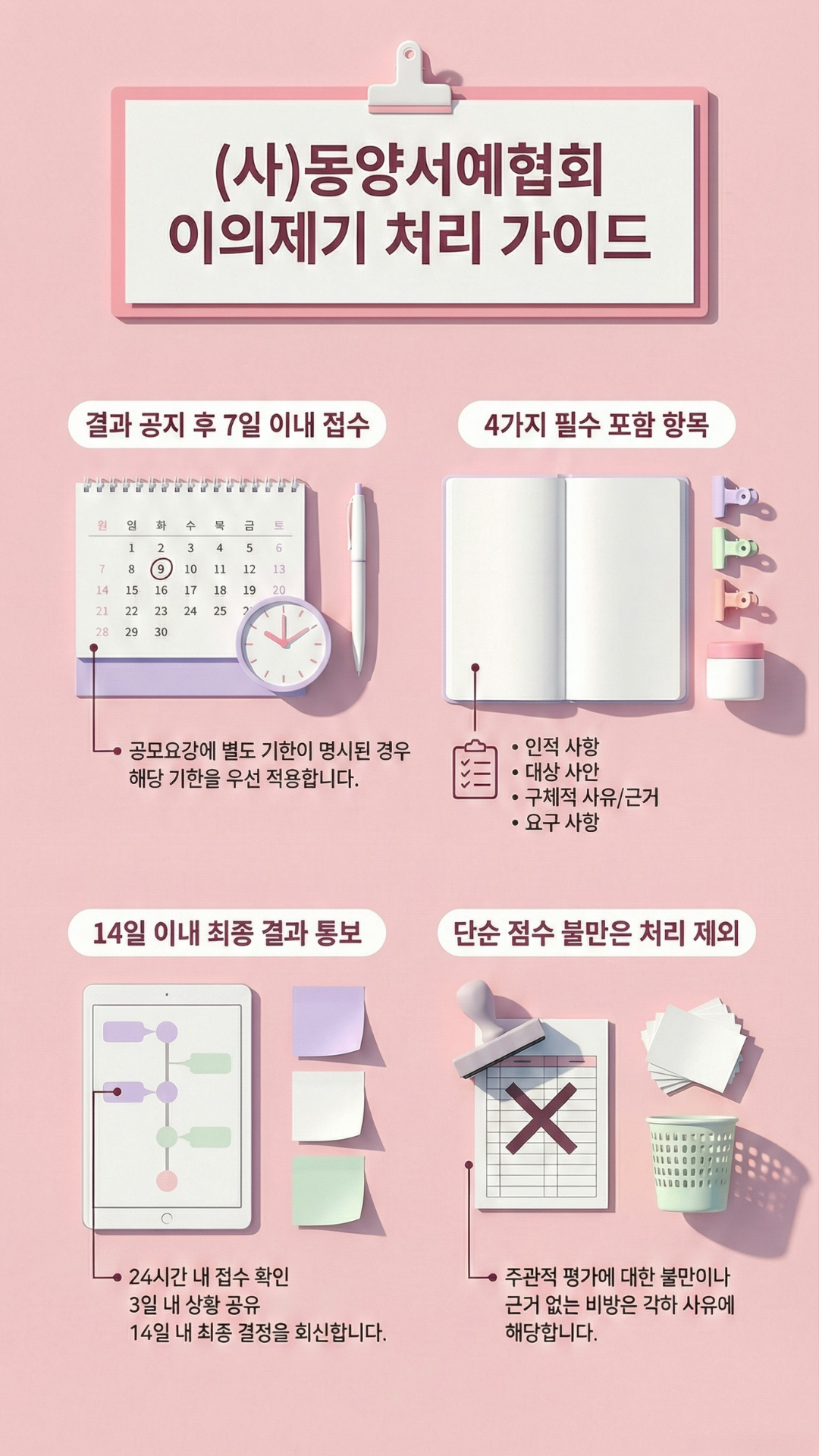
- 이의제기는 공식 결과 공지일로부터 7일 이내에 접수해야 합니다.
- 개별 사업의 공모요강에 별도 기한이 명시된 경우, 해당 기한을 우선 적용합니다.
제4조 (접수 방법 및 필수 항목)
이의제기는 서면(이메일 또는 전용 폼) 접수를 원칙으로 하며, 다음 사항을 반드시 포함해야 합니다.
- 인적 사항: 성명, 연락처, 접수번호 (또는 출품 부문)
- 대상 사안: 이의를 제기하는 특정 항목 또는 절차
- 사유 및 근거: 객관적 사실에 기반한 구체적 사유 (증거 자료 첨부 권장)
- 요구 사항: 정정, 사실 확인, 재검토 등 구체적인 요청 내용
[운영 팁] 홈페이지 내 전용 접수 창구 마련
- 이메일: asca_help@example.com (예시)
- 온라인 폼: [이의제기 접수 바로가기] 버튼을 통해 구글 폼이나 네이버 폼으로 연결하면 데이터 관리가 용이합니다.
제5조 (처리 원칙 및 기한)
- 접수 확인: 접수 후 영업일 기준 24시간 이내에 접수 완료 알림을 발송합니다.
- 1차 회신: 접수일로부터 영업일 3일 이내에 검토 진행 상황을 공유합니다.
- 최종 회신: 접수일로부터 영업일 14일 이내에 최종 결정 사항을 공식 통보합니다. (단, 전문적인 재검증이 필요한 경우 기간을 연장할 수 있으며, 이 경우 지연 사유를 사전 고지합니다.)
제6조 (유형별 처리 기준)
- 절차적 오류: 접수, 누락, 공지 과정의 행정적 실수는 즉시 확인 후 정정합니다.
- 사실관계 오류: 출품자 정보 및 작품 정보 오기는 증빙 확인 후 수정합니다.
- 검증 요청: 현장 휘호 결과나 원작 대조 요청 시, 심사위원회 또는 운영위원회의 의결에 따라 재검증을 진행할 수 있습니다.
제7조 (각하 및 기각)
협회는 다음의 경우 이의제기를 수용하지 않을 수 있습니다.
- 정해진 접수 기간을 도과한 경우
- 필수 정보가 누락되어 검토가 불가능한 경우
- 심사위원 개인의 주관적 평가(점수)에 대한 단순 불만인 경우
- 근거 없는 비방, 인신공격 또는 업무 방해 목적이 뚜렷한 경우
부칙 (附則)
부칙 <제1호, 2026. 02.13>
제1조(시행일) 이 규정은 공포한 날부터 시행한다.

회원과 임원의 자격
- 본회의 회원과 임원은 현재 전통 한글 및 한문 서예, 현대서예, 캘리그라피, 서각, 전각 및 문인화, 수묵화(梅, 蘭, 菊, 竹), 민화 등의 작품활동, 교육 및 연구를 하고 있거나, 연구개발을 위해 본인의 재능을 지역이나 개인에게 나누는 등의 봉사활동에 관심이 많은 분.
- 사단법인 동양서예협회 설립취지에 동의하여, 소정의 가입절차를 마치고 연회비를 납부하신 분.
- 이외의 추천작가 및 초대작가, 임원 등의 자격은 "정관"과 "추천ㆍ초대작가 선임 규칙"에 따릅니다.
- 추천작가는 3년 이상의 정회원 경력과 수상실적이, 초대작가는 5년 이상의 추천작가 경력이 필요합니다.
회원과 임원의 권리와 의무
- 본회의 정회원은 본회에서 추진하는 국내외의 전시회 등 사업 및 임원에 대한 선거권과 피선거권을 가지며, 회의에 참석하여 본회의 활동에 관한 의견을 제안하고 의결에 참여할 권리를 가집니다.
- 회원은 본회의 자료 및 출판물을 무상으로 제공 받을 수 있습니다. 다만 전시회 도록 등은 유상으로 구매하셔야 합니다.
- 본회의 회원과 임원은 소정의 입회ㆍ등록비와 연회비를 반드시 납부하여야 하며, 총회에서 결의한 제반사항을 준수할 의무를 가집니다.
- 본회의 회원과 임원은 본회가 주최하는 전시회 출품과 각종 행사 참석, 그리고 정관 및 관련 규칙 등 제반규정을 준수할 의무를 가집니다.
- 정관 제7조 제3항에 의거 회원이 회비 및 제 부담금을 미납시에는 회원의 자격 및 권한을 정지하며, 차후 회비 납부 시에는 그 권한을 복원합니다.
- 등록비와 연회비 납부는 온라인 모금함을 통하여 진행하며, 마이페이지를 통하여 회원 혹은 임원 본인의 납부내역을 확인합니다.
- 연회비를 납부하신 모든 정회원과 협회가 지정한 금액 이상의 발전기금과 후원금 및 기부금을 납부하신 임원들에게는 본인의 경력과 작품들을 지속적으로 관리 및 전시하실 수 있는 사이버공간을 제공하며 동양서예협회 홈페이지에 게시합니다.

![[訃告] 惺谷 林炫圻 명예이사장님 영면](https://cdn.prod.website-files.com/6220af701a295f89dac62631/689c1e0338fe8d36c93c076c_%E1%84%80%E1%85%A5%E1%86%B7%E1%84%8C%E1%85%A5%E1%86%BC%E1%84%89%E1%85%A2%E1%86%A8%E1%84%80%E1%85%AA%20%E1%84%92%E1%85%B4%E1%86%AB%E1%84%89%E1%85%A2%E1%86%A8%20%E1%84%89%E1%85%B5%E1%86%B7%E1%84%91%E1%85%B3%E1%86%AF%E1%84%92%E1%85%A1%E1%86%AB%20%E1%84%8B%E1%85%B5%E1%84%86%E1%85%B5%E1%84%8C%E1%85%B5%20%E1%84%8E%E1%85%AE%E1%84%86%E1%85%A9%20%E1%84%87%E1%85%AE%E1%84%80%E1%85%A9%20%E1%84%8B%E1%85%B5%E1%86%AB%E1%84%89%E1%85%B3%E1%84%90%E1%85%A1%E1%84%80%E1%85%B3%E1%84%85%E1%85%A2%E1%86%B7%20%E1%84%89%E1%85%B3%E1%84%90%E1%85%A9%E1%84%85%E1%85%B5.png)
